Bullying often involves a power imbalance, where the bully has some form of advantage over the victim, such as physical strength, popularity, or social status. Bullying can occur in various settings, including schools, workplaces, online platforms, and communities. It can have serious and long-lasting effects on the victim’s mental and emotional well-being, leading to anxiety, depression, low self-esteem, and even suicidal thoughts. Recognizing and addressing bullying behavior is crucial to creating safe and supportive environments for everyone.
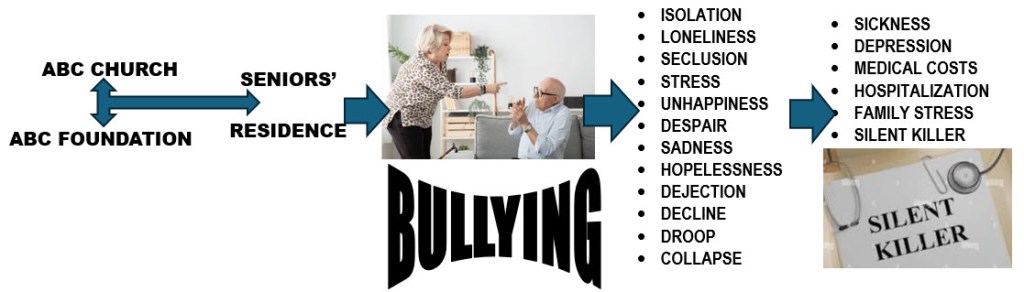
When bullying occurs, According to World Health, “…..both mental and physical health are impacted, and loneliness is linked to an increased risk of depression and cognitive deterioration. A lower quality of life and a sense of purposelessness might result from a lack of social connections. To effectively design measures for minimizing the detrimental health effects, it is vital to recognize these relationships…”’.
I am taking this opportunity to bring to your attention a serious situation adversely affecting the lives of senior citizens. A friend of mine has been living in a senior’s residence for the past seven years and has experienced and observed a pattern of power imbalance and alleged bullying by the management / landlord.
As a freelance writer, I have brought to the forefront many challenges being faced by seniors living in rental apartments. I have described those challenges in my blog site: www.info2write.com.
“…..In many jurisdictions, bullying in rental apartments may not be explicitly mentioned in the Residential Tenancies Act or similar legislation. However, harassment, which often encompasses bullying behavior, may fall under the purview of these laws. Harassment can include actions or behaviors that create an intimidating, hostile, or offensive environment for tenants…”.
Section 23 of the Residential Tenancies Act, states that a landlord shall not harass, obstruct, coerce, threaten or interfere with a tenant.
Therefore, I ask you, are the following examples of alleged bullying sufficient to allege that a landlord is violating section 23 of the RTA as well as bordering on criminal conspiracy – and yet ignored by the government and NGO’s?
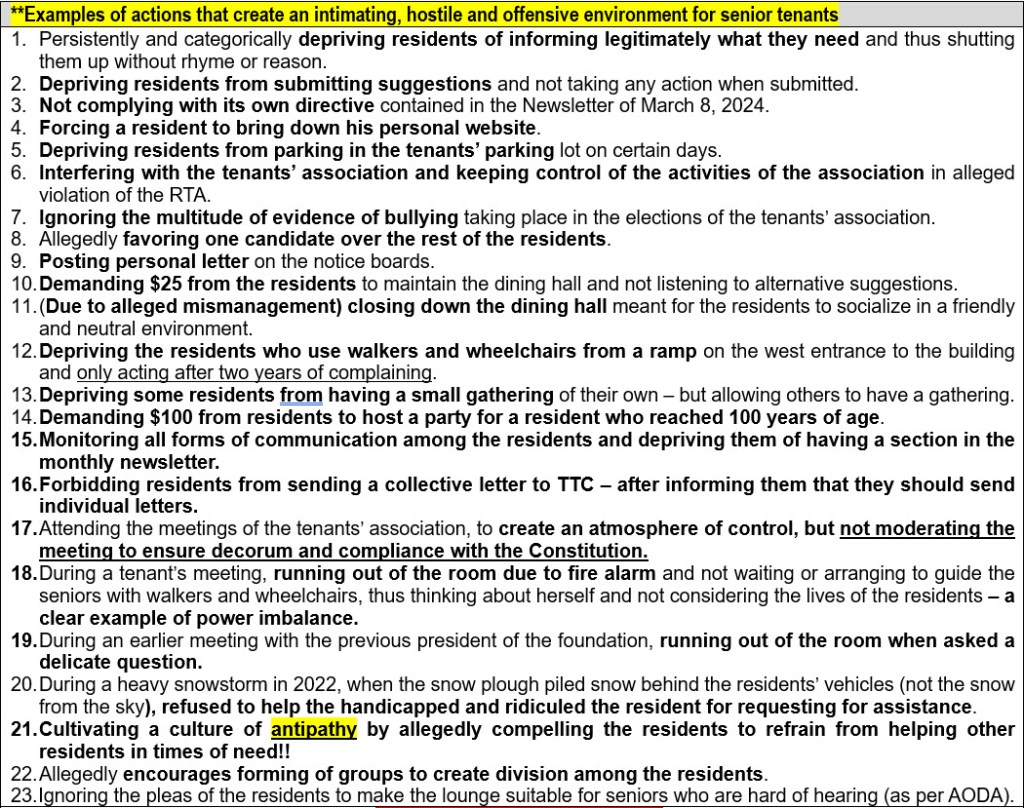
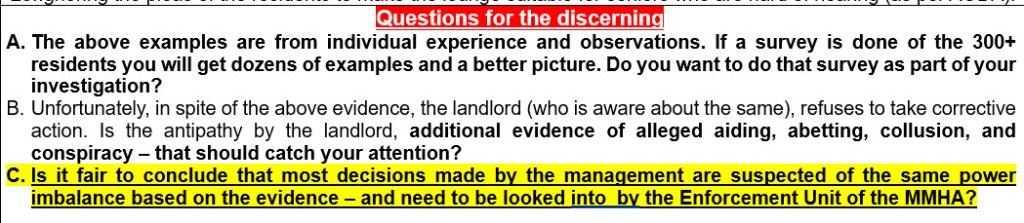
P.S. Information for this blog was researched and all stakeholders were given an opportunity to confirm or deny the reliability of the contents. Nobody has responded.
“…..Landlords have a duty to provide tenants with a peaceful and habitable living environment, and this includes taking measures to address harassment or bullying among tenants. If the behavior constitutes a violation of the tenant’s rights to quiet enjoyment or breaches the lease agreement’s terms, it could be grounds for legal action.
Tenants experiencing bullying or harassment should document the incidents and communicate them to their landlord or property management company. If the issue persists or if the landlord fails to address it adequately, tenants may seek recourse through relevant housing authorities or legal channels, such as filing a complaint or seeking legal advice….”

- What is bullying?
According to ChatGPT, bullying refers to repeated aggressive behavior intended to harm or intimidate someone perceived as weaker. It can take many forms, including physical, verbal, or relational aggression. Bullying often involves a power imbalance, where the bully has some form of advantage over the victim, such as physical strength, popularity, or social status. Bullying can occur in various settings, including schools, workplaces, online platforms, and communities.
Examples of bullying can vary widely and may include:
- Verbal bullying: This involves using words to harm or intimidate the victim, such as name-calling, teasing, taunting, making threats, or spreading rumors.
- Social or relational bullying: This involves intentionally excluding, ignoring, or ostracizing the victim from social groups, spreading rumors or gossip about them, or manipulating others to turn against them.
- Cyberbullying: This occurs through digital platforms such as social media, texting, email, or online forums. Cyberbullies may send hurtful messages, spread rumors, share embarrassing photos or videos, or engage in harassment or impersonation online.
- Racial or cultural bullying: This involves targeting someone based on their race, ethnicity, nationality, religion, or cultural background, through derogatory comments, stereotypes, or discriminatory actions.
These are just a few generic examples, and a list of actual incidents is described above**. However, bullying can take many other forms depending on the specific circumstances and dynamics involved. It’s important to recognize that bullying behavior is not limited to these examples and can manifest in various ways.
2. Is bullying a crime?
Bullying itself is not always considered a crime in the legal sense, as it can encompass a wide range of behaviors and may not always meet the criteria for criminal charges. However, certain forms of bullying, such as physical assault, harassment, threats, or cyberbullying, may constitute criminal offenses depending on the jurisdiction and the specific circumstances.
For example, Harassment: Persistent and unwanted behavior that causes distress or fear in the victim, such as repeated verbal abuse, stalking, or intimidation, may be classified as harassment, which can be a criminal offense.
While bullying itself may not always result in criminal charges, certain behaviors associated with bullying can be illegal and may be subject to legal consequences. It’s essential to report instances of bullying or harassment to appropriate authorities, such as school administrators, employers, or law enforcement, to address the issue and ensure the safety and well-being of the victim.
How do we gather evidence of bullying in a seniors’ residential apartment when it goes under the radar?
3. Where there is Smoke, there is FIRE
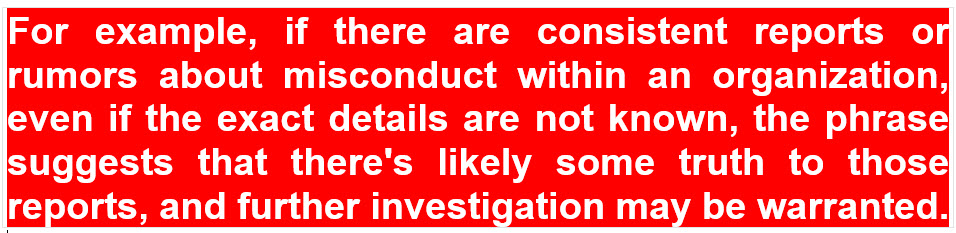
The phrase “where there is smoke, there is fire” is an idiomatic expression that suggests where there are signs or indications of something suspicious or alarming, there is likely some truth to it. In other words, it implies that if there are rumors, hints, or evidence of a problem or wrongdoing, there’s probably some basis for those suspicions.
- Metaphorically, it indicates that when there are visible signs of trouble (the “smoke”), there’s often an underlying cause or issue (the “fire”). It’s often used to convey the idea that even though the full extent of a situation might not be immediately apparent, there’s likely some validity to the concerns or observations being made.
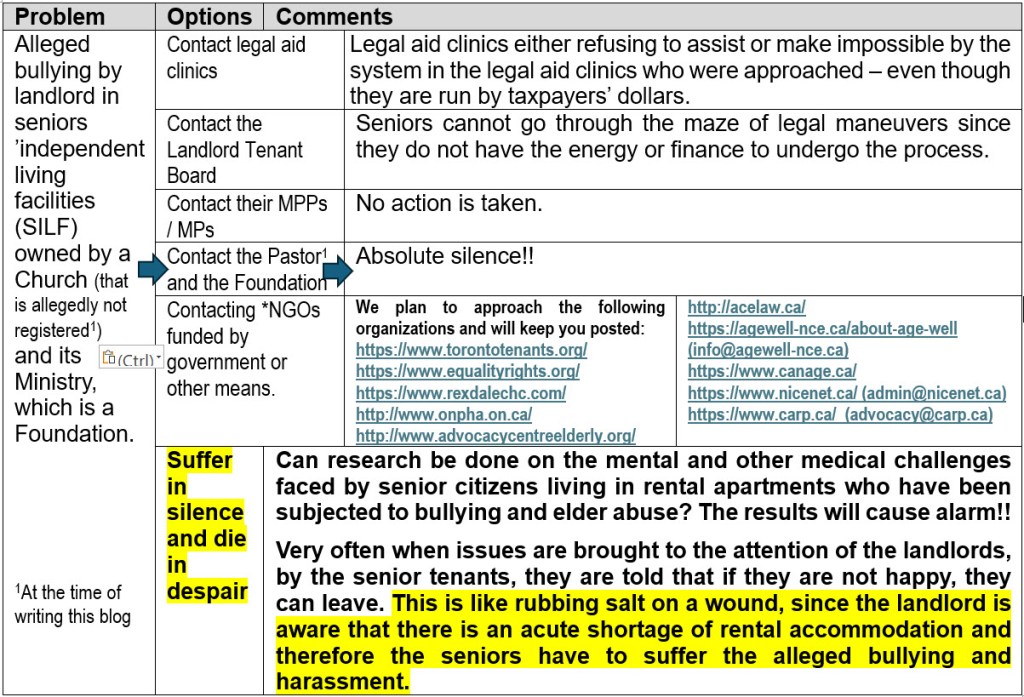
Unfortunately, some NGO’s who are funded directly or indirectly by taxpayer dollars do not even have the courtesy to respond or enter into a discussion – even though their mandate is to address the challenges faced by senior citizens. They are allegedly focused on issues which they are familiar with or where there may be monetary gains, but they do not wish to enter into a wider discussion issues facing issues of bullying of senior citizens in rental apartments.
One would assume that the *NGOs would address a wider spectrum of elder issues – including bullying of seniors who live in Independent Living Facilities (SILF). As you know, seniors who live in retirement homes and long-term care homes have their own statutes and Bills of Rights to protect them. Unfortunately, seniors who live in rental apartments do not have those privileges and are therefore left to the mercy of the RTA – which you know is a nightmare of procedures and delays.
For example, the problems faced by seniors living in rental apartments who are bullied or suffer from elder abuse, have very limited options and therefore they are very susceptible to stress, depression, and even silent death:
- B. Another very important fact is that many of the residents of seniors’ rental apartments, who are silent and do not participate in meetings or discussions or express their problems, are those who are on rent subsidy. They do not wish to rock the boat or express themselves lest they lose their subsidy or are evicted. They are very fearful, and this defeats the entire Mission Statement of the Landlord. On the other hand, the landlord allegedly encourages residents to apply for rent subsidy since the landlord knows that they will get their full market rent from the Government – and allegedly these residents will not open their mouths or speak against the landlord.
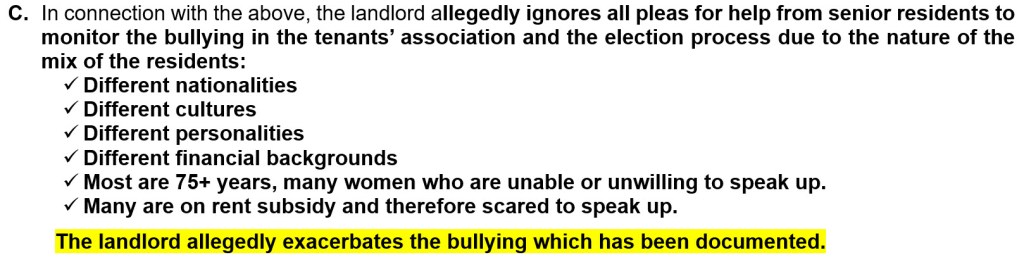
- D) So, it is up to those paying full rent to stand up for the rights of all the residents – those paying full rent and those on rent subsidy.
Many of the challenges faced by seniors living in rental apartments are described in my blog site: www.info2write.com.
Very often when issues are brought to the attention of the landlords, by the senior tenants, they are told that if they are not happy, they can leave. This is like rubbing salt on a wound, since the landlord is aware that there is an acute shortage of rental accommodation and therefore the seniors have to suffer the alleged bullying and harassment.
What is your solution?
After reading this blog, and doing your own due diligence, do you believe that seniors living in rental apartments (who may or not be your family, relative or friends) should suffer in silence? please speak up for them and make a difference. Thank you.
P.S.
The solution offered is to introduce the Bill of Rights for Senior Citizens residing in SILF and other residencies not covered by the Retirement Homes Act and the Long-Term Care Homes Act. You can read more about the Bill of Rights in this blog post:
(https://right2writeca.wordpress.com/2022/04/13/seniors-helping-seniors/)
In view of the lack of responses to the repeated requests to the government and some of the following NGOs as follows to look into the bullying and elder abuse existing in seniors independent living facilities (SILF), we have prepared a solution that is staring in front of our eyes, but ignored for lack of genuine desire to address the plight of senior citizens:
https://www.torontotenants.org/
https://www.equalityrights.org
https://www.torontotenants.org/
https://agewell-nce.ca/about-age-well (info@agewell-nce.ca)
https://www.nicenet.ca/ (admin@nicenet.ca)
https://www.carp.ca/ (advocacy@carp.ca)
http://www.advocacycentreelderly.org/
“Blessed are they who maintain justice, who constantly do what is right.” – Psalm 106:3
 Freedom to share information to the right audience
Leave a comment